


The Fruition
The idea of Dirty Roots sprouted after our previous visits to the Philippines and meeting local Philippine artisans and weavers. The name “Dirty Roots” stuck out to us the most because we felt it connected with our upcoming collection that was inspired by the unspoken narrative of our Philippine heritage. Finally, to create a collection that featured handwoven Philippine textiles is a huge milestone for us.
At RICH Tribe, we care deeply about the artistry and detail in every garment — finding sewers who share that same dedication proved to be one of our greatest challenges.
After several disappointing samples from multiple manufacturers and with our trip nearing its end, we began to worry that we’d return home without finding a solid lead. Then, by chance, during a visit to Glorietta Mall, we came across #ShoP&Paul beach shorts. We reached out to the owner to ask if he could create samples for us — and from that moment, the wheels began to turn.

The Design
The pieces in this collection are inspired by the urban lifestyle of the Philippines. We collaborated with LA-native street artist, Beanzo, who designed all of our graphic tees. The perspective of each artwork gave awareness to deeply rooted issues happening today in the Philippines such as mental health and seeking financial stability through marriage. When we began brainstorming ideas for what to create with the handwoven fabric we had it in our minds to create something that was unisex and versatile with different styles. We decided to go with the Kimono Bomber jacket because we felt it was perfect to wear alone and lightweight enough to layer. We enhanced the design to include large outer pockets, two large inner pockets for extra storage, and an inner mesh lining for breathability and comfort.

Sourcing
Sourcing materials in the Philippines presented a number of challenges, from negotiating and managing the purchasing process to coordinating the shipment of fabrics to our manufacturer. Many of the tribes we work with live in rural, provincial areas, so fabrics are often transported by bus, with trips lasting up to 13 hours. A key aspect of our sourcing strategy was to cut out the middleman and work directly with the tribes — not only to secure the best possible price but also to cultivate personal relationships with the weaving communities. For the Dirty Roots collection, we featured fabrics from two indigenous Philippine tribes: the Inlaud/Itneg Tribe of Abra and the Yakan Tribe of Zamboanga.


Samples
Creating samples requires organization, clear communication, and patience. Essentially, sample making is the process of developing the perfect prototype on which a garment will be based. Clear, direct communication is crucial to avoid misunderstandings during production. Our smaller, more intimate production team allows us to take a hands-on approach throughout the process. To minimize fabric waste, we provide detailed specifications, particularly regarding garment construction and measurements, with the goal of reducing revisions. Lead time for samples varies depending on the complexity of the design — for instance, it took up to 1–2 weeks to produce the kimono bomber samples, whereas a standard t-shirt would typically take only a couple of days.

Production
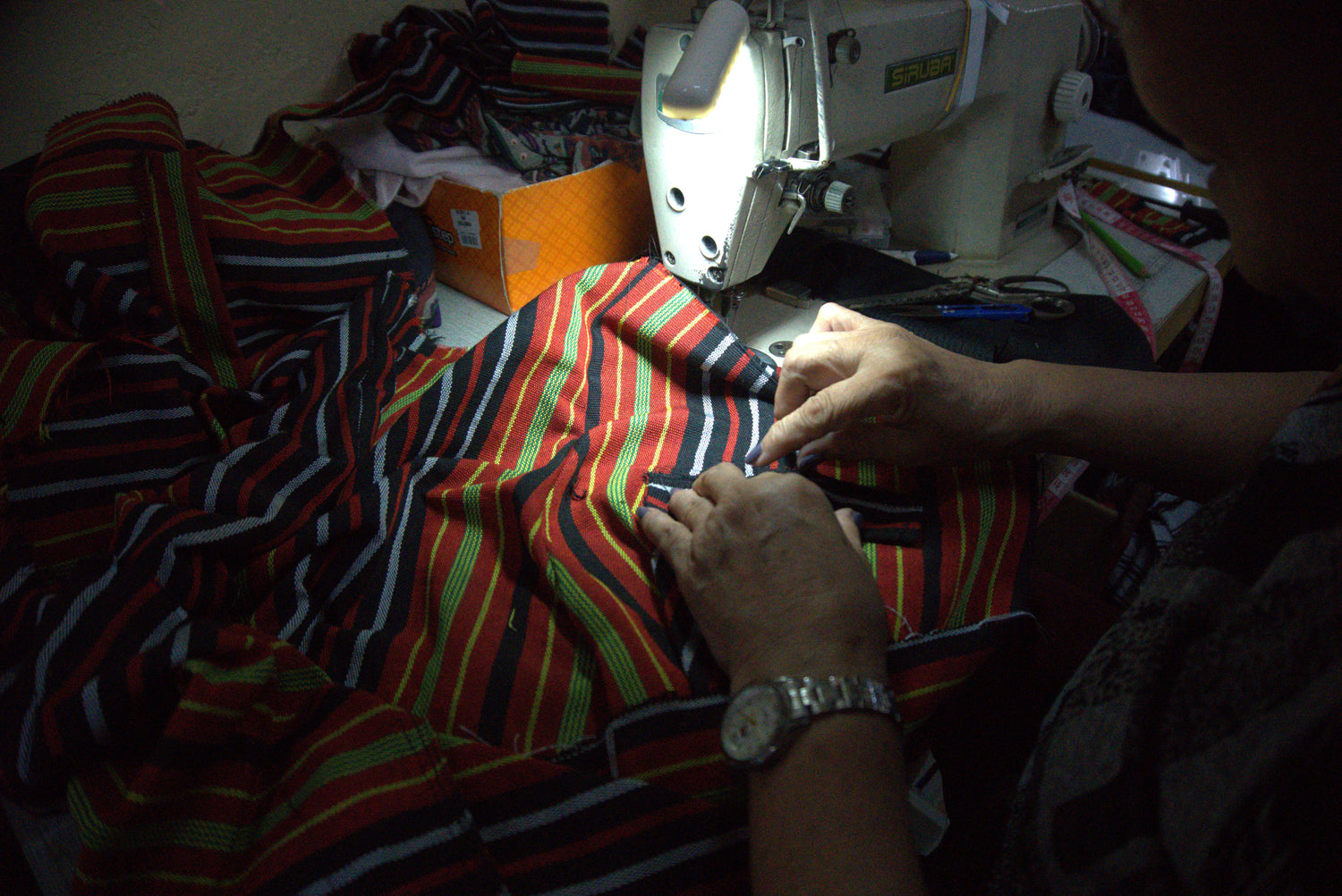
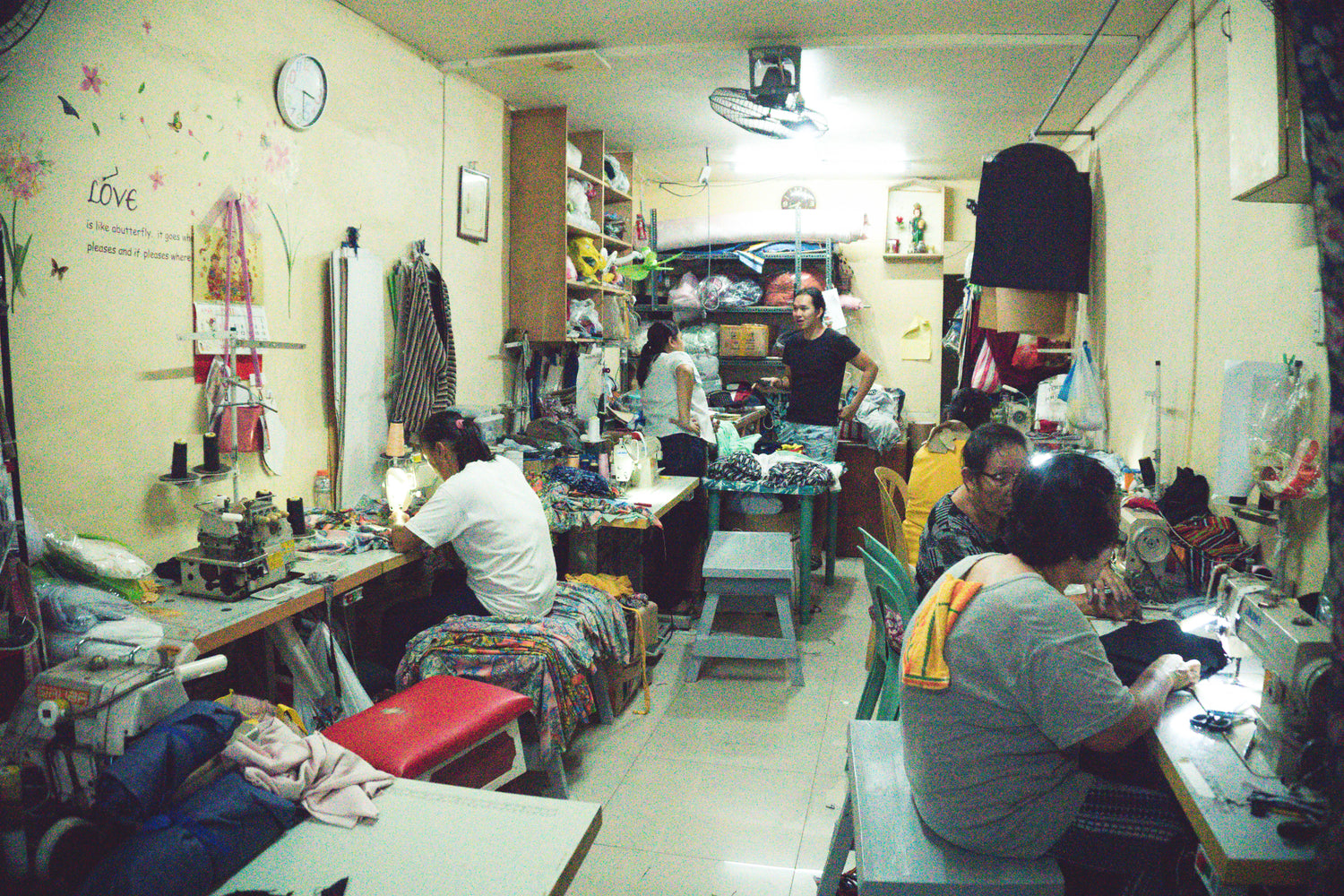
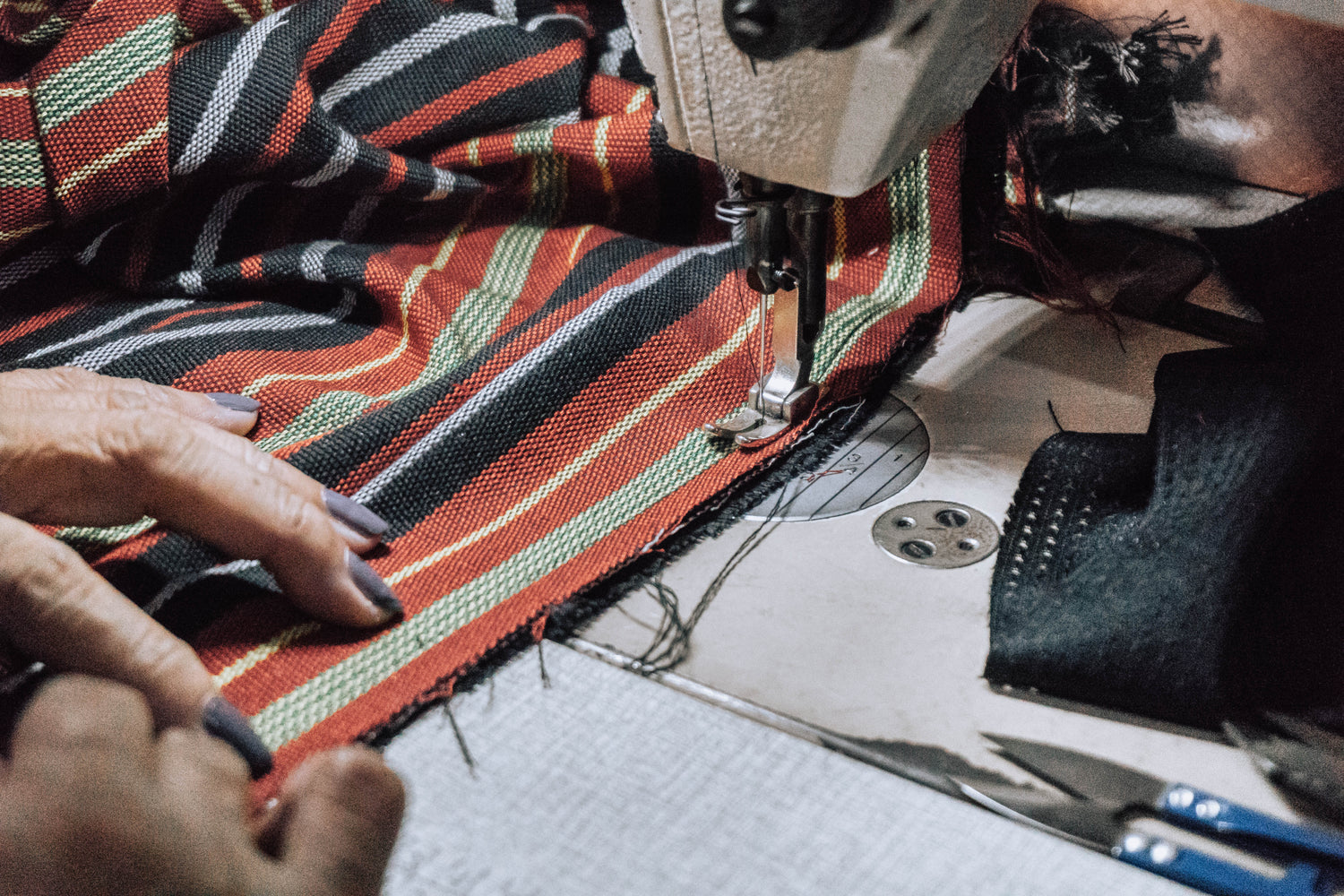
Once the design and measurements are finalized, all materials are sent to our production partner in Manila, Philippines, where a dedicated team of six — including sewers and cutters — brings each garment to life. Our pattern makers create precise patterns for every piece, and the production process follows an assembly-line approach, with tasks divided according to garment construction. This can include cutting fabric, sewing linings or accessories, and completing the finished garment. We’ve found this method to be the most efficient for our production volume.
A key aspect of our process is low-quantity production. In alignment with our commitment to sustainability, we produce collections in small batches to minimize the risk of overproduction — a leading cause of textile waste. Once a garment is completed, it undergoes rigorous quality control, with every piece inspected for safety, design, sizing, stitching, appearance, and color accuracy. Only after passing these checks are the garments carefully packed and distributed.
Read More from Our Journal
View all-

We're Back: A Letter from RICH Tribe
RICH Tribe returns with a renewed purpose and a deeper connection to our roots. We share why we stepped away, what we’ve rebuilt, and what this new chapter means for...
We're Back: A Letter from RICH Tribe
RICH Tribe returns with a renewed purpose and a deeper connection to our roots. We share why we stepped away, what we’ve rebuilt, and what this new chapter means for...
-

"For The Locals" | Los Angeles Exhibition
Presented by RICH Tribe x LA-native local artist — @spiltbeanz — as they collaborate on a joint exhibition featuring curated fashion & art at Grand Central Market in downtown Los...
"For The Locals" | Los Angeles Exhibition
Presented by RICH Tribe x LA-native local artist — @spiltbeanz — as they collaborate on a joint exhibition featuring curated fashion & art at Grand Central Market in downtown Los...
-

Logistx x RICH Tribe
@logistx_ugf — Olympian, World Champ, & Red Bull All-Star takes the stage.
Logistx x RICH Tribe
@logistx_ugf — Olympian, World Champ, & Red Bull All-Star takes the stage.


